Introduction
At AWS re:Invent 2025, Dr. Werner Vogels, Amazon's Vice President and CTO, delivered what he announced as his final keynote after 14 years of tradition. Titled "With Echoes of Evolution and Innovation", the session blended historical reflections, personal anecdotes, and forward-thinking advice for developers navigating an AI-driven world.
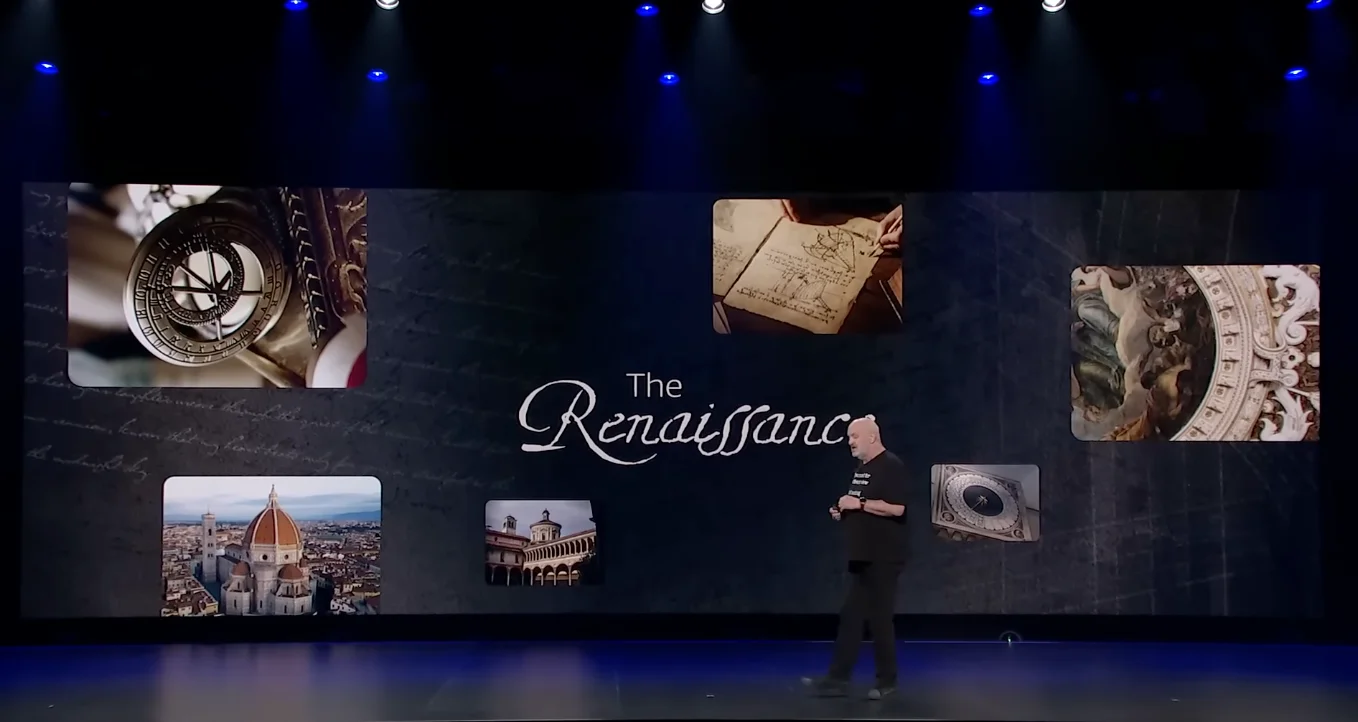
Vogels framed the modern developer as a "Renaissance Developer," drawing parallels to the curiosity and interdisciplinary prowess of figures like Leonardo da Vinci. The keynote, available to watch in full here, addressed the "elephant in the room", fears about AI displacing jobs, while emphasizing adaptation, tools, and human ingenuity. Amid a video montage of developer generations and evolving tech, Vogels reassured the audience: "Will AI make me obsolete? Absolutely not.", adding, "If you evolve."
This recap summarizes the core messages, highlights key segments, and explores the framework Vogels introduced.
The Elephant in the Room: AI and Developer Evolution
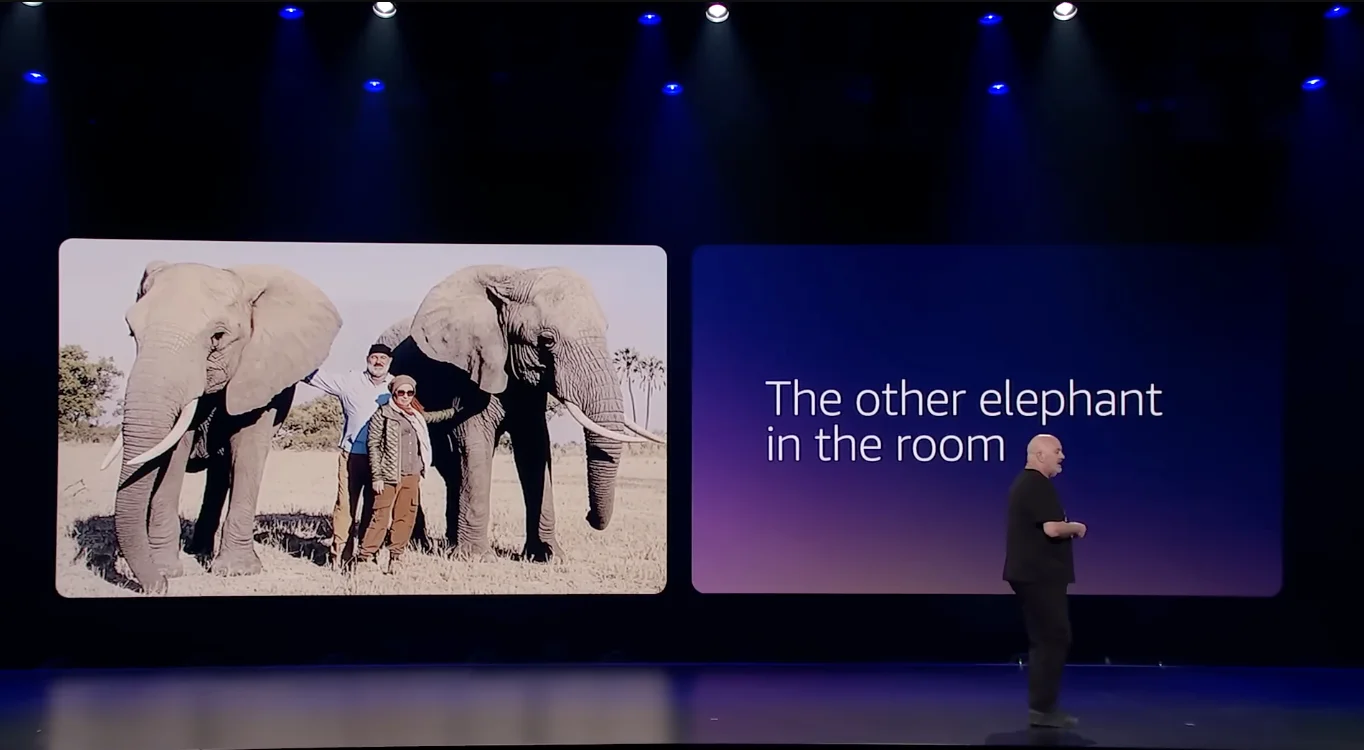
Vogels directly tackled the pervasive question he hears from customers worldwide: "Will AI take my job?". His response was nuanced; "Maybe.", explaining that some tasks will automate, skills may obsolesce, but developers who adapt will thrive. He reflected on his own career, from learning 68000 assembler and COBOL in school to modern IDEs like Cursor and Kiro. Tools evolve, he noted, citing historical shifts: compilers in the 1960s, structured programming in the 1970s, object-oriented paradigms with C++, and Amazon's monolith-to-microservices transition in the late 1990s.
Cloud computing revolutionized expectations, freeing developers from hardware woes via on-demand infrastructure. Vogels invoked Jeff Bezos' view of a "golden age" convergence, space, AI, robotics, mirroring the Renaissance's explosion of curiosity post-Dark Ages. Inventions like the pencil, vanishing point in art, microscope, telescope, and Gutenberg's printing press (with movable type and special ink) exemplified how tools and creativity intertwined. "We are again in a time of Renaissance.", Vogels declared, positioning developers at its center.
The Renaissance Developer Framework
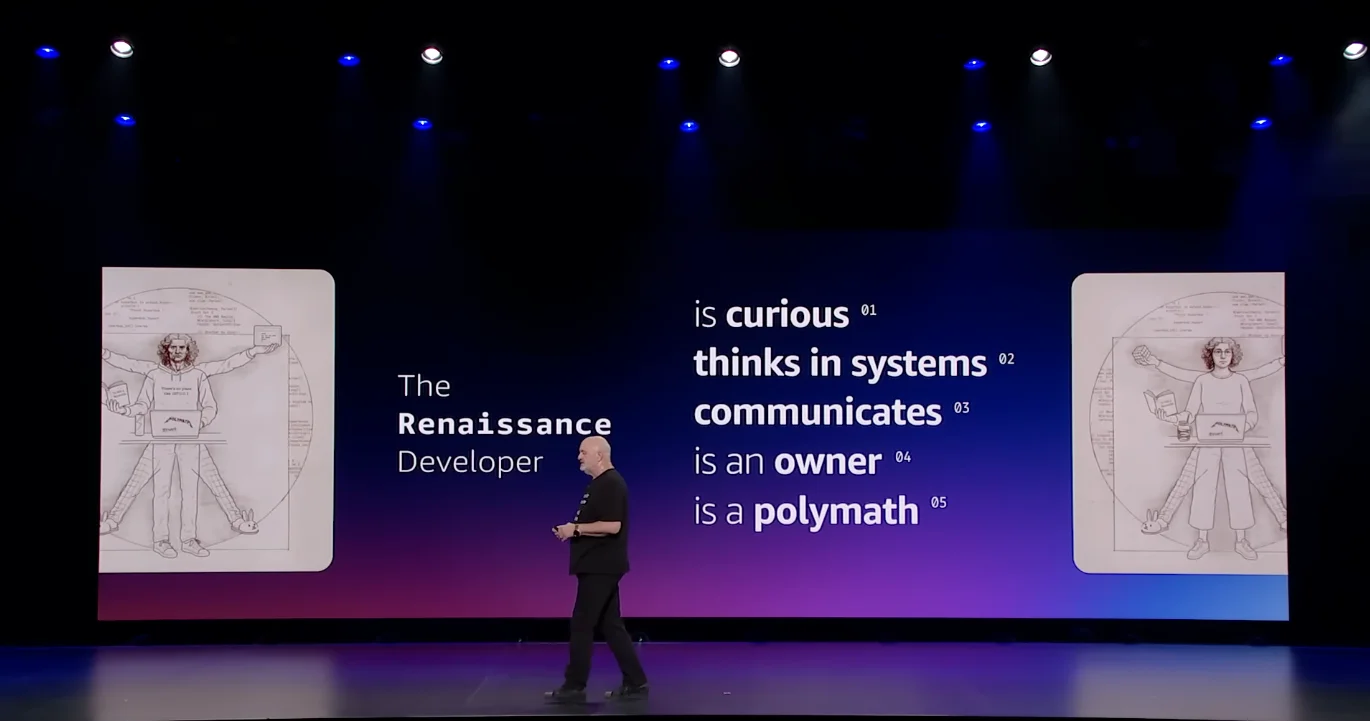
Vogels outlined five qualities essential for thriving as a "Renaissance Developer," urging attendees to nurture them amid rapid change.
1. Be Curious and Keep Learning
Curiosity drives invention; developers must experiment, embrace failure (e.g., da Vinci's failed airplane leading to modern flight), and learn socially.
Curiosity is critical. As developers, you always have to continuously learn because everything changes all the time. - Werner Vogels
Vogels shared travel stories: Grupo AJE's community support along the Amazon River, the Ocean Cleanup Project's AI-driven river models to combat plastic pollution, Rwanda's real-time health data system for policy-making, and KOKO Networks' ethanol ATMs in Nairobi for affordable clean cooking.
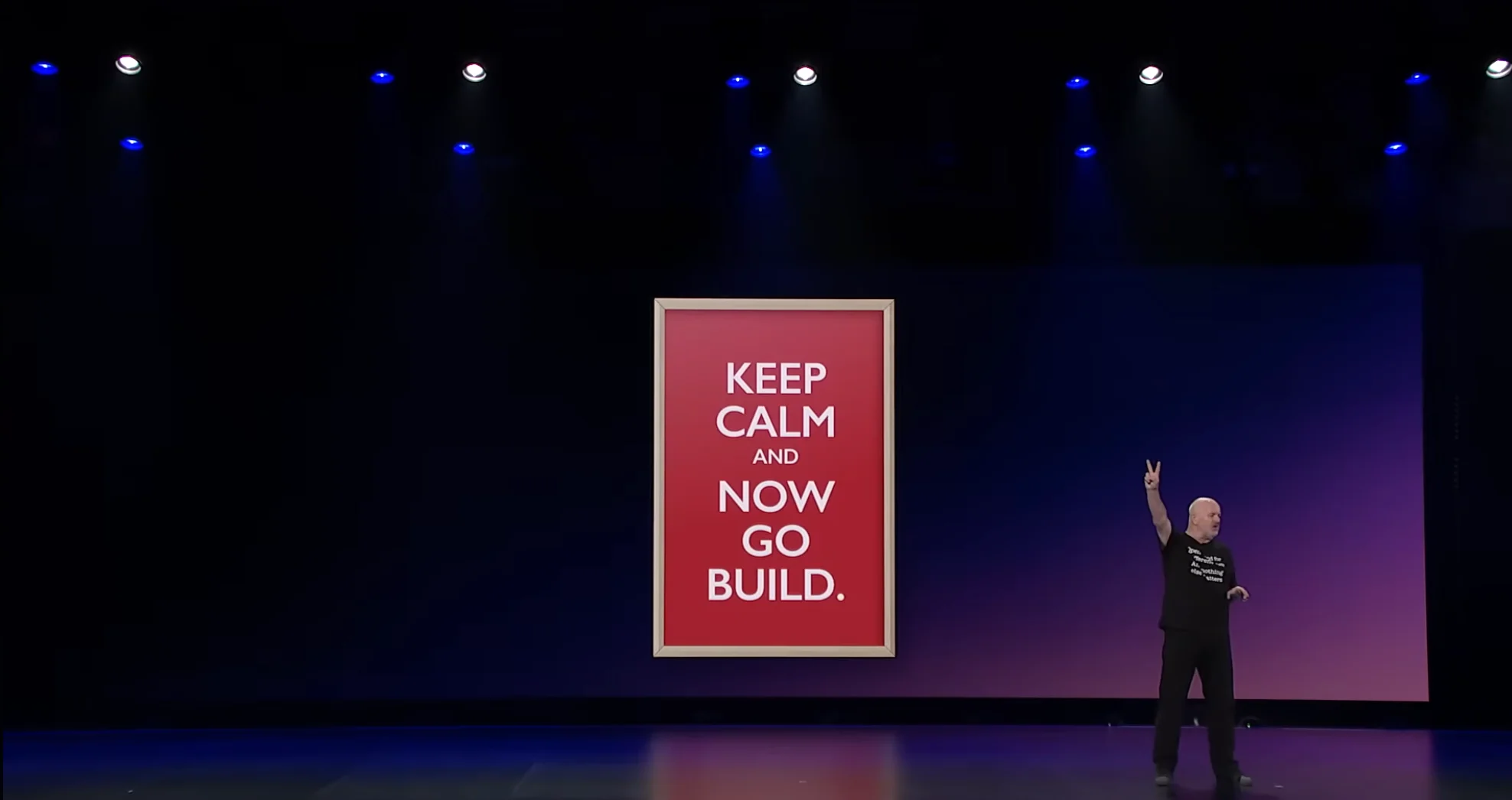
He highlighted AWS Heroes (now 265 across 58 countries) and awarded the Now Go Build 2025 prize to Rafael Quisumbing for community-building in the Philippines.
2. Think in Systems
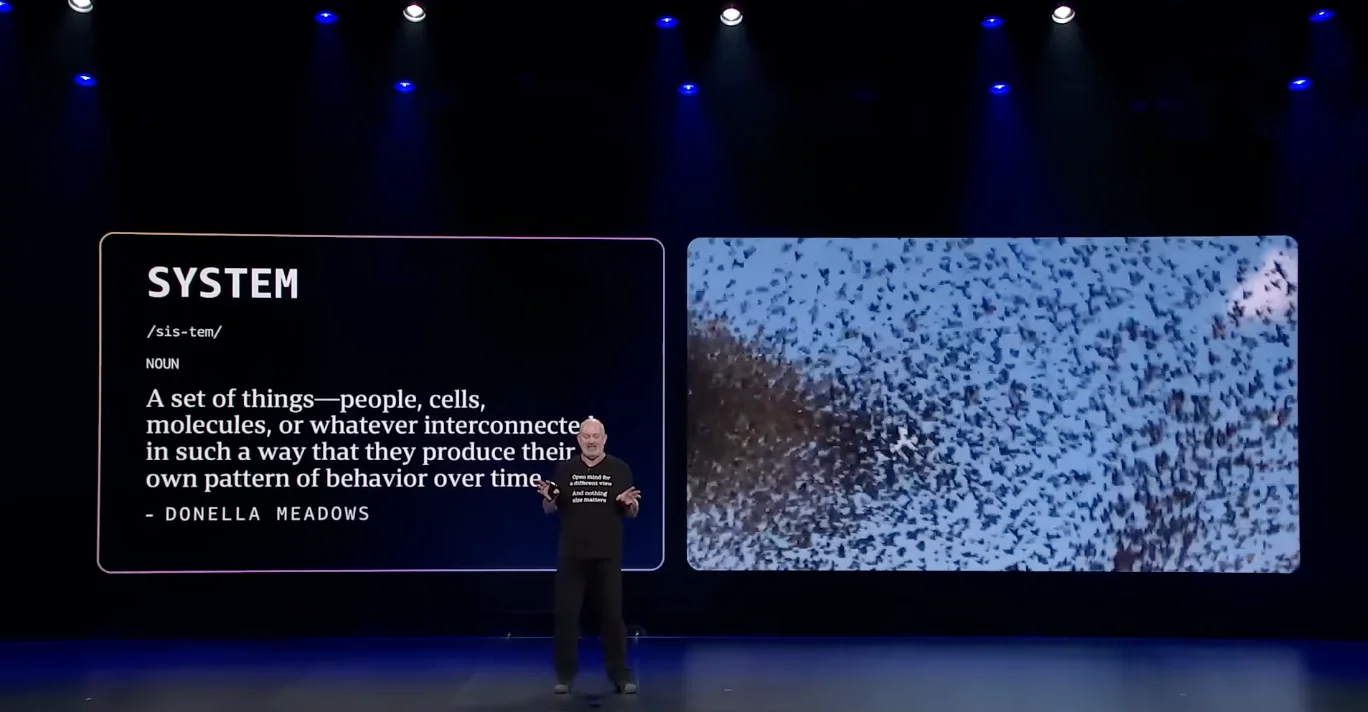
Drawing from ecologist Donella Meadows, Vogels explained systems as interconnected elements producing patterns over time. He used Yellowstone's trophic cascade (wolves' reintroduction reshaping ecosystems) as an analogy for software feedback loops (reinforcing vs. balancing). Developers must see the bigger picture: changing a retry policy affects load, adding a cache shifts traffic.
Every service, every API, every queue is part of a larger system. You can't change one part in isolation. Alter a retry policy and you affect load. Add a cache, you change traffic flow. - Werner Vogles
He recommended Meadows' "Leverage Points" paper for intervention strategies.
3. Communicate with Precision
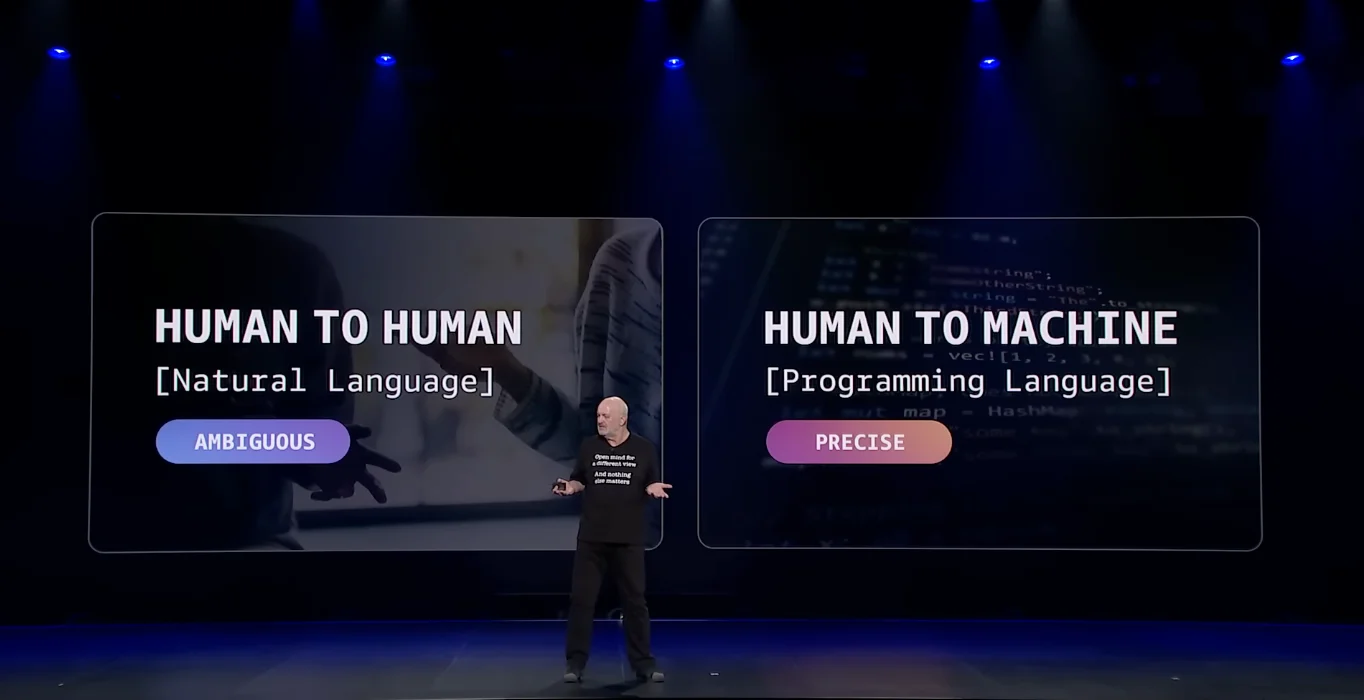
Ambiguity in natural language challenges AI-assisted coding. Vogels advocated spec-driven development to reduce it, citing historical examples like Dijkstra's formal specs and the Apollo Guidance System.
He illustrated this with Amazon's tiering system which divides features into Tier 1 (critical: search, cart, checkout), Tier 2 (important: recommendations), and Tier 3 (nice-to-have). Think of it as a communication tool for business stakeholders to understand availability tradeoffs and costs. But the challenge has intensified with AI-assisted coding.
We've always communicated to machines through programming languages because they were precise. But in today's world ofAI assited coding, we increasingly communicate with the machine in natural language, which is ambiguous. - Werner Vogels
Werner handed the stage to Clare Liguori, Senior Principal Developer on the from the Kiro team who demonstrated how specs (requirements, designs, tasks) enable precise AI interactions, rapid prototyping (e.g., inspired by Doug Engelbart's wooden mouse prototype), and faster builds—like Kiro's system notifications feature in half the time. Communication extends to business stakeholders, as in tiering system components for availability discussions.
4. Be an Owner
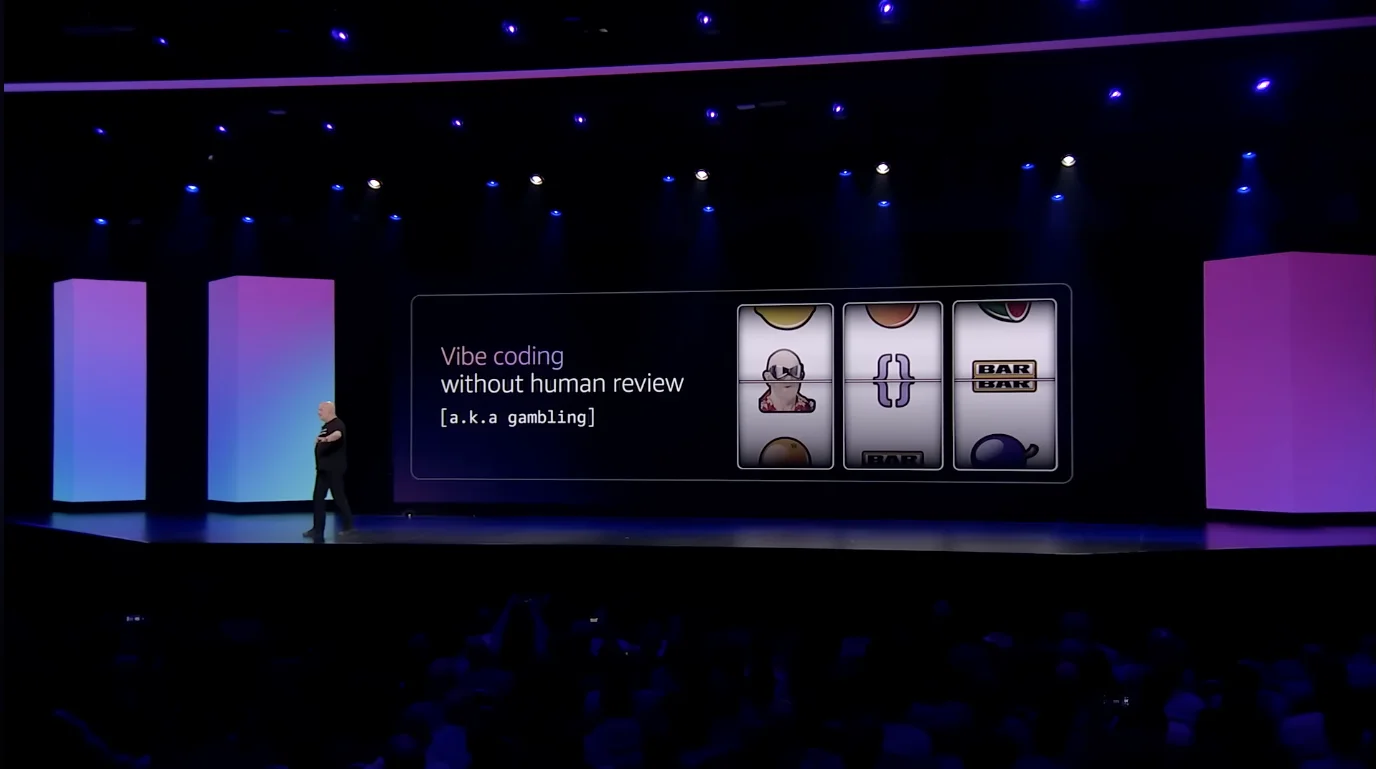
Ownership means ensuring software quality, especially with AI generating code faster than humans can verify. Vogels warned against vibe coding (gambling on outputs) and hallucinations (e.g., invented APIs).
AI can generate code faster than you can understand it... That gap allows software to move towards production before anyone has truly validated what is actually does. - Werner Vogels
He stressed mechanisms over intentions, recounting Bezos' Andon Cord-inspired button for customer service to halt defective products. Examples include S3's durability reviews and intensified code reviews for knowledge transfer. "The work is yours, not the tools." Werner emphasized and pleaded that human-to-human code reviews should continue to increase.
5. Become a Polymath
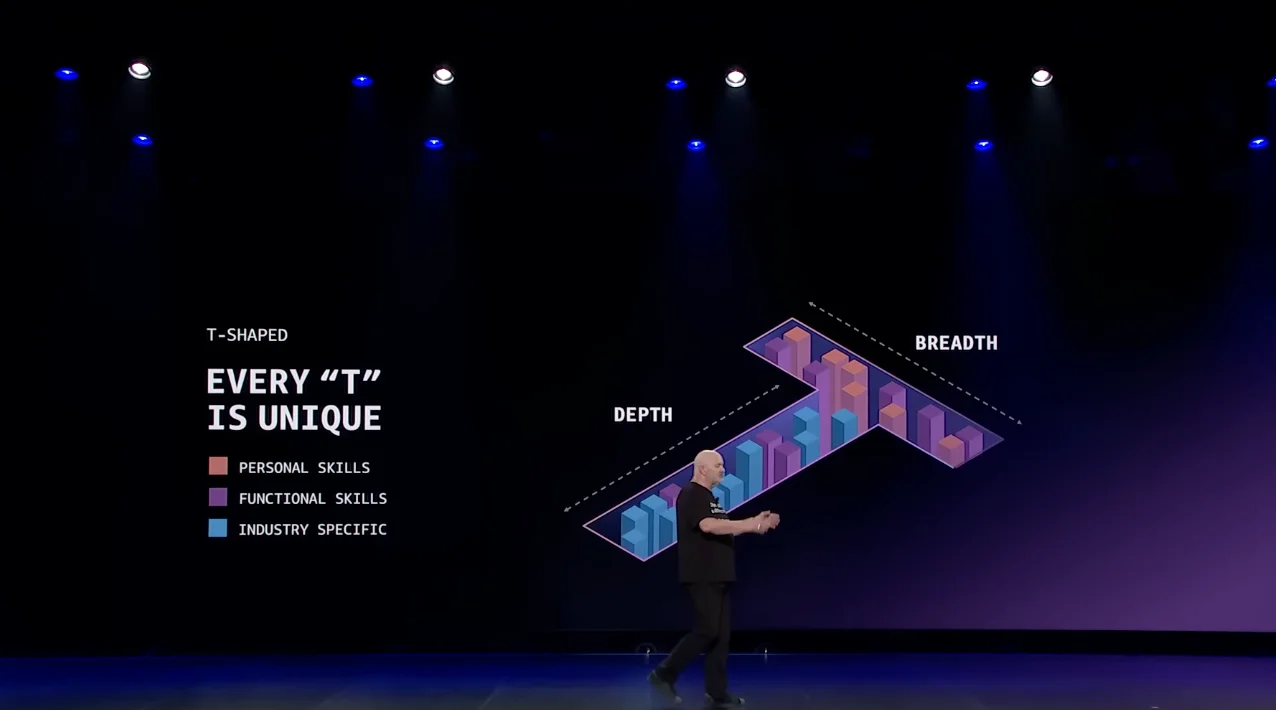
Polymaths (from Greek "Máthēma," to learn) span disciplines, like da Vinci. Vogels contrasted "I-shaped" (deep but narrow) with "T-shaped" developers (deep expertise plus breadth). He shared mentor Jim Gray's story, the Turing Award winner who invented transactions, as the ultimate example. Gray could diagnose a database flaw just by listening to the "rattling of the disks" because his understanding spanned hardware, software, and business.
T-shaped developers combine depth with breadth. They can dive deep into a specific problems, but will also understand how it fits into a larger system. That is my advice to all of you. Build both. Develop depth in your domain, but cultivate a range to connect to multiple disciplines and ideas. - Werner Vogels
Vogels wrapped with pride in "unseen work," urging operational excellence even without applause. He invited attendees to the closing party with Beck and Kaskade.
Conclusion
Werner’s keynote last year was more architecture-centric, targeting system-level complexity, distributed ops, and team alignment, with a nod to time as a foundational block. This year, he shifted to the individual developer, addressing AI fears head-on, personal growth (e.g., curiosity, polymathy), and coding workflows. It felt more inspirational and farewell-like, with guest spots and travel stories, while 2024 was pragmatic on scalability challenges.
After 14 years of defining the cloud era, his departure from the main stage signals a shift not just in leadership, but in the industry itself. By reframing the anxiety around AI into the empowering framework of the "Renaissance Developer," Vogels reminded the audience that while tools and architectures evolve, curiosity, ownership, and pride, the core spirit of the builder, remains constant.
And as the screen faded to black, his farewell was simply: "Werner, out."


%20(1).svg)

.svg)